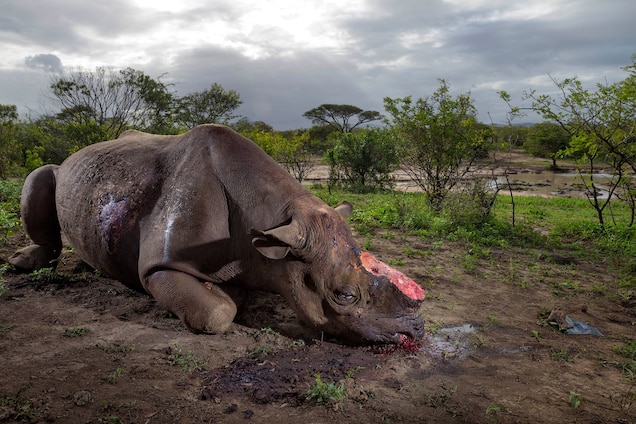
Poaching is a widespread issue that's affecting countless countries around the world. Poaching is the illegal hunting or capturing of wild animals. Usually, animals are poached for parts of their bodies, such as a rhino's horn or an elephant's tusks. Poachers can then sell these body parts for millions of dollars on the black market. This illegal hunting can have disastrous effects on the ecosystems of the area, and can even cause certain species to become extinct.
Kenya has been significantly affected by poaching. It is home to 1,258 rhinos (as of 2017) and has large wildlife reserves to protect these animals. Kenya is also home to the last two surviving Northern White Rhinos. Rhino population has been on a general decline over the last century, but has seen a gradual increase over the last few decades. It is of the utmost importance that we protect these animals, since they play an important role in Kenya's savanna ecosystems. Many species of rhino in Kenya, including the Black Rhino & Javan Rhino, are endangered, and it's crucial for humans to protect them.
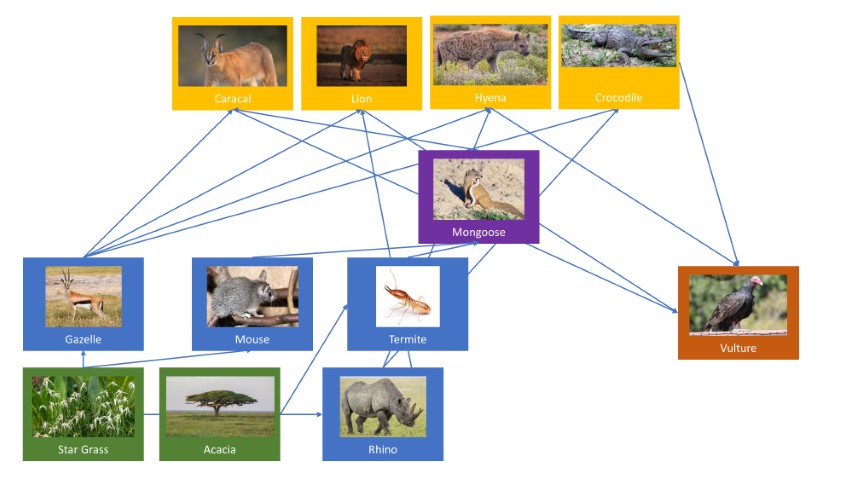
The organisms in green are primary producers and include star grass and acacia. These primary producers are autotrophs, which means that they create their own food. Primary consumers (blue), including the rhino, mouse, termite, and gazelle (all herbivores, which means that they only feed on plants), consume these producers. The mongoose (secondary consumer) eats the mouse & termite, and is an omnivore, so it feeds on both plants and animals. The primary & secondary consumers are eaten by tertiary consumers (yellow), which include the lion, caracal, hyena, and crocodile (all carnivores, meaning that they only eat animal matter). Finally, the vulture (detritivore), a quaternary consumer, consumes the remains of all other consumers. Detritivores feed on dead or decaying organic material. Although adult rhinos don't have any predators in the wild, tertiary consumers like lions and hyenas depend on juvenile and baby rhinos for a food source. Poaching rhinos removes a large food source for these tertiary consumers, and can cause their populations to fall. Humans are indirectly affected by poaching because the removal of rhinos and other animals from the ecosystem prevents natural resources from being returned to the environment. Because of this, the land may become non-arable, and humans' food production would be significantly impacted.
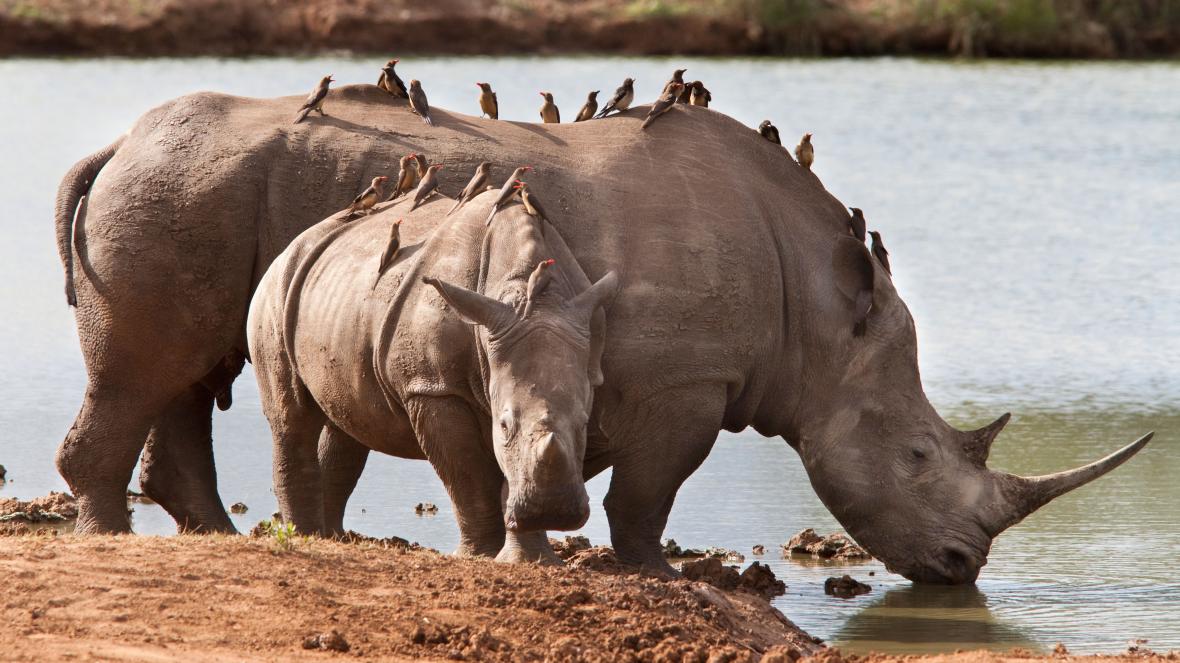
A mutualistic relationship that is directly affected by rhino poaching is the relationship between rhinos and the oxpecker bird. Oxpeckers eat ticks, parasites, and insects off of rhinos' skin. The oxpecker has a steady food source and the rhino is able to stay clean. If rhino poaching continues, oxpeckers could lose a large part of their diet. An example of commensalism can be seen in the relationship between rhinos and dung beetles. Rhinos produce up to 50 pounds of excrement a day, and dung beetles rely on this as a food source. Again, if rhinos continue to be poached, these beetles could lose a very important source of nutrition.
placeholder