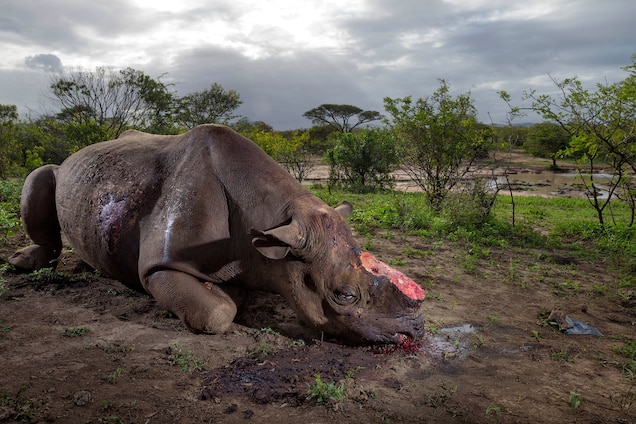
Poaching is a widespread issue that's affecting countless countries around the world. Poaching is the illegal hunting or capturing of wild animals. Usually, animals are poached for parts of their bodies, such as a rhino's horn or an elephant's tusks. Poachers can then sell these body parts for millions of dollars on the black market. This illegal hunting can have disastrous effects on the ecosystems of the area, and can even cause certain species to become extinct.
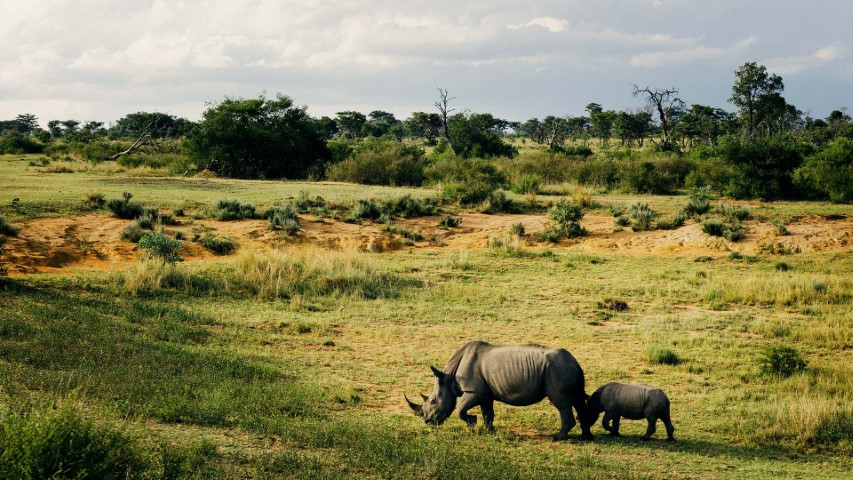
Kenya has been significantly affected by poaching. It is home to 1,258 rhinos (as of 2017) and has large wildlife reserves to protect these animals. Kenya is also home to the last two surviving Northern White Rhinos. Rhino population has been on a general decline over the last century, but has seen a gradual increase over the last few decades. It is of the utmost importance that we protect these animals, since they play an important role in Kenya's savanna ecosystems. Many species of rhino in Kenya, including the Black Rhino & Javan Rhino, are endangered, and it's crucial for humans to protect them.
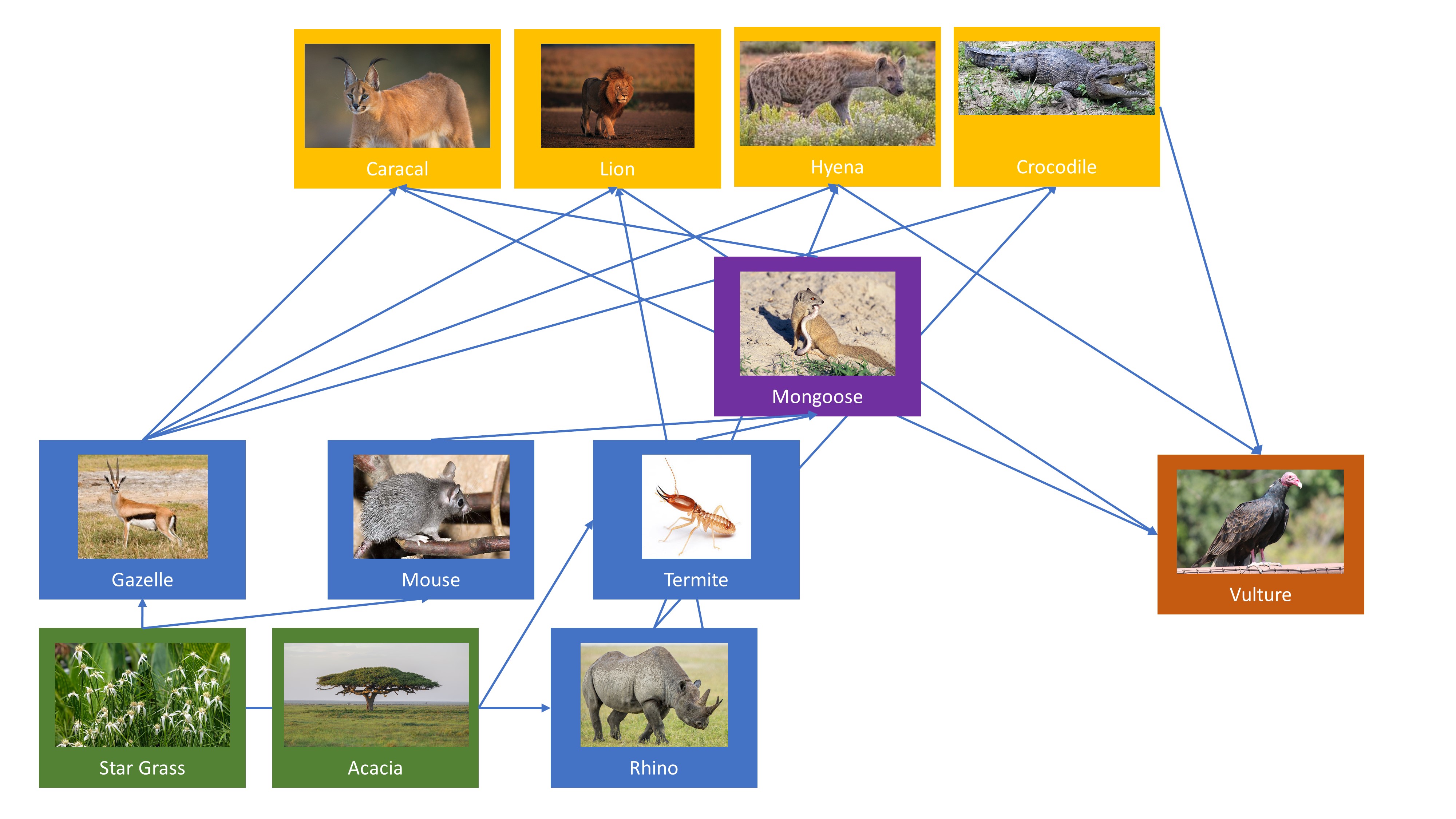
The organisms in green are primary producers and include star grass and acacia. These primary producers are autotrophs, which means that they create their own food. Primary consumers (blue), including the rhino, mouse, termite, and gazelle (all herbivores, which means that they only feed on plants), consume these producers. The mongoose (secondary consumer) eats the mouse & termite, and is an omnivore, so it feeds on both plants and animals. The primary & secondary consumers are eaten by tertiary consumers (yellow), which include the lion, caracal, hyena, and crocodile (all carnivores, meaning that they only eat animal matter). Finally, the vulture (detritivore), a quaternary consumer, consumes the remains of all other consumers. Detritivores feed on dead or decaying organic material. Although adult rhinos don't have any predators in the wild, tertiary consumers like lions and hyenas depend on juvenile and baby rhinos for a food source. Poaching rhinos removes a large food source for these tertiary consumers, and can cause their populations to fall. Humans are indirectly affected by poaching because the removal of rhinos and other animals from the ecosystem prevents natural resources from being returned to the environment. Because of this, the land may become non-arable, and humans' food production would be significantly impacted.
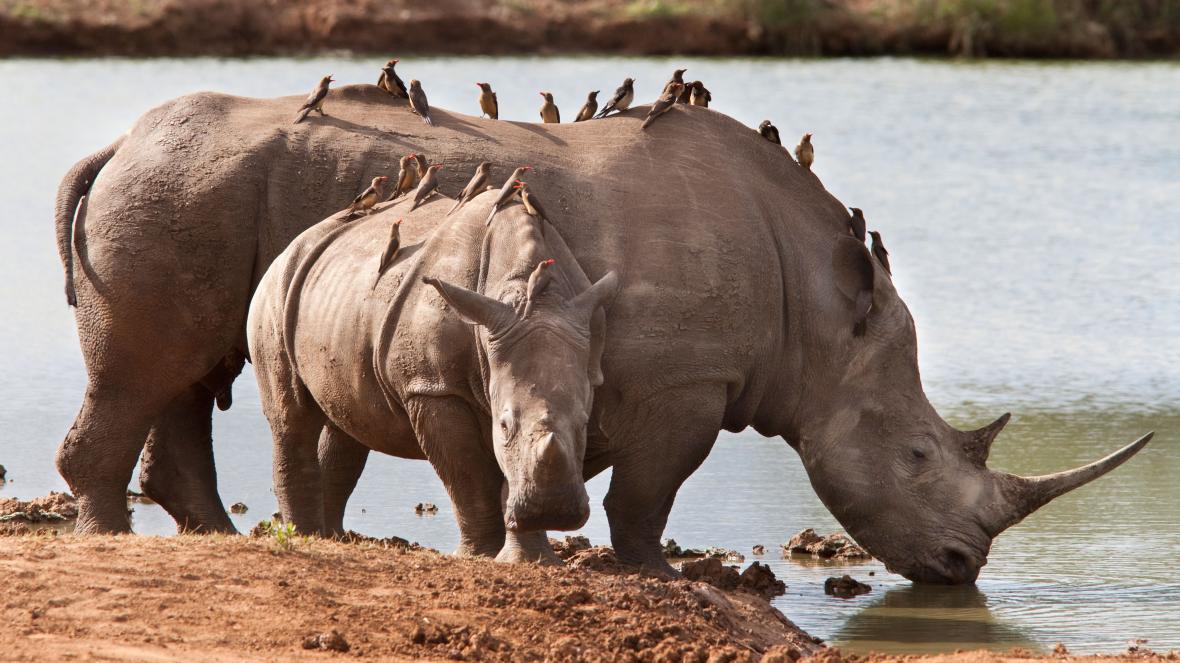
A mutualistic relationship that is directly affected by rhino poaching is the relationship between rhinos and the oxpecker bird. Mutualism means that both organisms benefit from the relationship. Oxpeckers eat ticks, parasites, and insects off of rhinos' skin. The oxpecker has a steady food source and the rhino is able to stay clean. If rhino poaching continues, oxpeckers could lose a large part of their diet. An example of commensalism can be seen in the relationship between rhinos and dung beetles. Commensalism is when one organism benefits from a relationship and the other is unaffected. Rhinos produce up to 50 pounds of excrement a day, and dung beetles rely on this as a food source. Again, if rhinos continue to be poached, these beetles could lose a very important source of nutrition. Finally, an example of parasitism is the relationship between rhinos and the bot fly. Parasitism is when one organism benefits from the relationship and the other one is harmed. In this case, the bot fly lives almost its entire life cycle inside a rhino's stomach by eating parts of the rhino's ingested food. The bot fly is able to carry out its life functions, but the rhino loses part of the food it eats. Since bot flies live exclusively in rhino stomachs, poaching may eventually cause the extinction of Africa's largest fly species. If poaching continues, these relationships may be gone forever, and their loss would cause diversity to fall significantly in the environment. Also, symbiotic relationships can take thousands of years to mature, so continued poaching will prevent ecosystems from ever bouncing back. This can cause important natural resources to be removed from our planet, which will be disastrous for the human population.
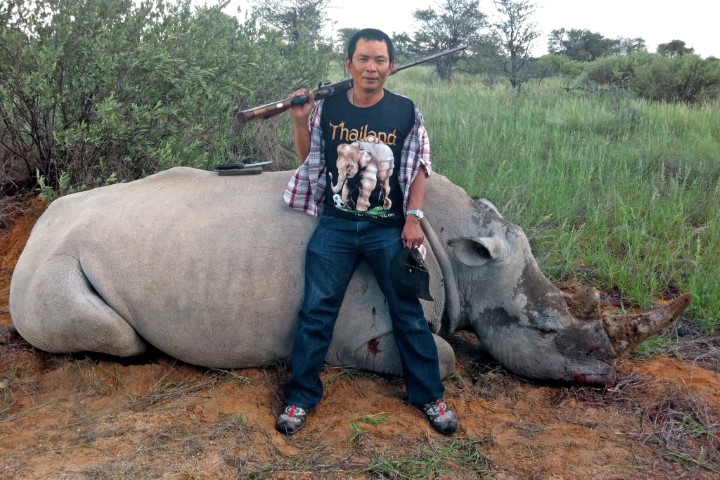
There are many causes of rhino poaching in Africa. Some of the main causes include poor regulation & a large black market for horns and other rhino products. Due to poor regulation and bad practices in African law enforcement, poaching has become very hard to regulate. Although laws are being put into place to conserve rhino populations, police are regularly taking bribes from poachers in return for "turning a blind eye." In many cases, there are also long-standing agreements between poachers and police officers, allowing poachers to continue hunting rhinos and other protected animals. The black market for rhino products has also been growing over the last few decades. Many people from Western countries believe that horns and other parts of rhinos have healing properties, and can cure diseases like cancer. This high demand for rhino products causes the prices to skyrocket, which urges the poachers to continue poaching rhinos to sell more product on the black market.
Education of the public, in both Africa and other countries around the world, is one of the most important methods of solving rhino poaching. In Africa, police officers and civilians should be educated about the disastrous consquences of poaching rhinos and how they can prevent bribery in law enforcement. People in other parts of the world should be educated on how rhino products have no medical value to humans, and can't actually cure terminally ill people. More rigorous monitoring of trade channels and online marketplaces must also be put into place to make it harder for poachers to sell rhino products worldwide. Another potential solution to poaching of rhinos is to track all rhinos in Africa using low-power BLE (Bluetooth Low Energy) sensors. These sensors can be made to track where rhinos are, how they're being approched by poachers, and their vital stats (heart rate, breathing, etc). By tracking the rhino population in this way, law enforcement will be able to find patterns in poacher movement and react quickly to new cases.
Sources for the information and pictures used in this project can be found here.
placeholder